
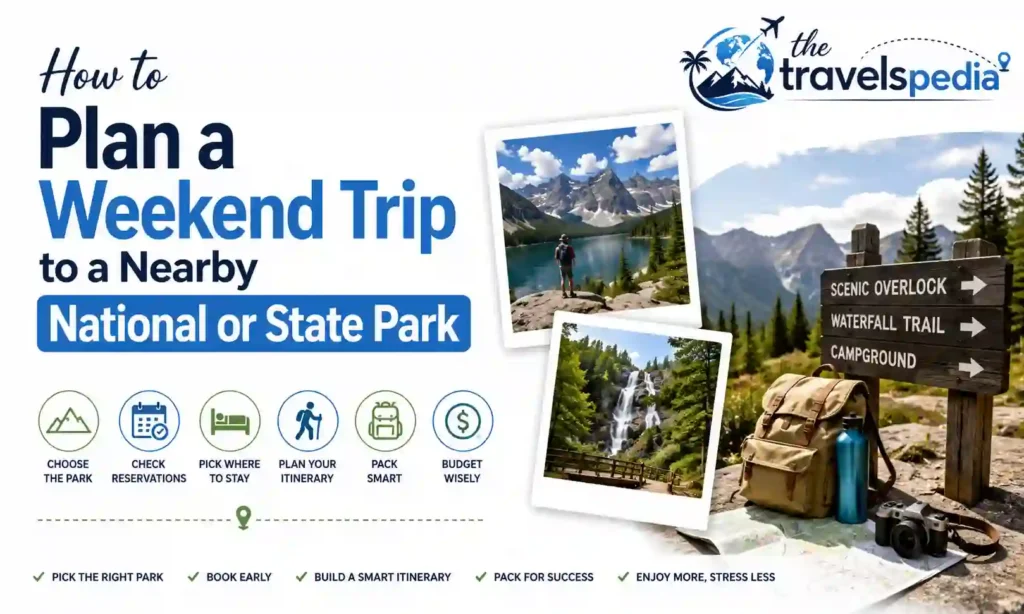
You don’t need a week off or a cross-country flight to get a real outdoor escape. Most people live within a few hours of a national park, a national forest, or a well-run state park, and a well-planned weekend is often enough to hike a great trail, watch a sunset from a real overlook, and come back feeling like you actually left home. The trick is planning it efficiently, since a poorly planned two-day trip can burn most of its time on driving, parking, and figuring things out on the fly.
Here’s how to plan a weekend trip to a nearby national or state park from start to finish.
Plan a weekend trip to a nearby national or state park By these steps
Step 1: Choose the Right Park for a Weekend
Not every park works well for a short trip. Massive parks like Yellowstone or the Grand Canyon reward multi-day visits, but even they have compact areas that can be enjoyed well in a weekend if you focus rather than try to see everything.
- Pick based on distance, not fame. A well-run state park two hours away will almost always give you a better weekend than a famous national park that eats up most of a day just getting there.
- Look for a park with one clear “anchor” experience, like a signature overlook, a well-known trail, or a distinctive landscape feature, rather than a park that requires days to appreciate.
- Check if the park pairs well with a nearby national forest or a second, smaller park. Many well-known parks are surrounded by quieter public land that sees far fewer crowds and can round out your itinerary.
Step 2: Check Reservations and Entry Requirements Early
This step matters more than most people expect, and it’s the one most likely to derail a last-minute weekend plan.
- Many popular parks and trails now require timed-entry permits or advance reservations, especially during peak season.
- Campground bookings inside national parks typically open six months in advance and fill up fast, so check availability as soon as your dates are set.
- If in-park camping isn’t available, look at nearby state park campgrounds or private campgrounds just outside the entrance, which are often easier to book on short notice.
- Always check the park’s official website rather than relying on older blog posts, since entry rules and fees change fairly often.
Step 3: Decide Where You’ll Stay
Where you sleep has a bigger impact on a short trip than it does on a longer one, simply because you have less time to lose.
- Staying just outside the main entrance cuts down on morning drive time and lets you get to popular trailheads before the crowds and the parking lots fill up.
- Camping inside the park gives you the earliest possible start and the most immersive experience, but requires more planning around gear and reservations.
- A nearby town often has more lodging variety and food options, at the cost of a longer daily commute into the park.
Step 4: Build a Simple Two-Day Itinerary
A good weekend park itinerary is less about covering ground and more about not wasting the limited time you have.
Day 1:
- Arrive early, ideally by mid-morning, and head straight to the park’s most popular trail or viewpoint before crowds build up.
- Stop at the visitor center for updated trail conditions, wildlife activity, and any last-minute closures.
- Plan one moderate hike or scenic drive for the afternoon, leaving buffer time for photo stops.
- Aim to catch sunset at a viewpoint, since golden hour in most parks is genuinely worth planning around.
Day 2:
- Start early again, since mornings tend to be cooler, quieter, and better for wildlife sightings.
- Choose a second, different kind of experience from Day 1, such as a lake, a waterfall, or a shorter nature trail, rather than repeating the same type of hike.
- Build in a flexible buffer before you need to start heading home, since weekend trips often run behind schedule by the second day.
Step 5: Pack for the Specific Park, Not Just “The Outdoors”
- Footwear: Broken-in hiking shoes or boots suited to the park’s actual terrain, whether that’s rocky desert trails or muddy forest paths.
- Navigation: Download offline maps in advance, since cell service is unreliable or nonexistent in most parks.
- Water and snacks: More than you think you’ll need, especially for parks with limited facilities along the trails.
- Weather layers: Even warm-season trips can turn cold quickly at higher elevations or after sunset.
- First-aid basics: Pain relief, blister care, and any personal medication, since help can be far away in more remote parks.
- A paper map or printed permit, as a backup in case your phone battery or signal lets you down.
Step 6: Budget for the Weekend
Costs vary widely by park and region, but a typical weekend trip generally includes:
- Entrance fees: Often a flat per-vehicle fee, typically ranging from a few dollars to around 35 dollars for popular national parks, though many state parks charge less.
- Camping or lodging: Campsites are usually the most affordable option, while nearby hotels or cabins cost more but add comfort and convenience.
- Gas and food: Often the largest variable cost, particularly for parks that require a longer drive or have limited on-site dining.
- Optional passes: If you plan to visit multiple parks within the year, an annual parks pass can pay for itself after just a few visits.
Common Mistakes to Avoid
- Trying to see too much. A weekend is enough for one or two solid experiences, not an entire park’s highlight reel.
- Skipping the official park website. Trail closures, wildlife activity, and reservation requirements change often, and the park’s own site is the most reliable source.
- Underestimating drive times within the park. Some parks are large enough that getting between two points can take longer than the hike itself.
- Not booking early enough. Popular campgrounds and timed-entry slots can fill up weeks or months in advance during peak season.
Frequently Asked Questions
How far in advance should I plan a weekend trip to a national park?
For popular parks during peak season, booking campgrounds or timed-entry permits one to six months ahead is common. For quieter state parks or off-peak visits, a week or two is often enough.
Is a weekend enough time to enjoy a national park?
Yes, as long as you focus on one or two key experiences rather than trying to cover the whole park. Most parks have a handful of standout trails or viewpoints that can be comfortably enjoyed in two days.
Should I stay inside the park or in a nearby town?
Staying inside or right at the entrance saves time and gets you to popular spots before the crowds, while a nearby town usually offers more lodging and food options at the cost of a longer daily commute.
What’s the difference between a national park and a state park for a weekend trip?
National parks tend to be larger, more famous, and more likely to require advance reservations, while state parks are often smaller, quieter, and easier to book on short notice, making them a great option for a spontaneous weekend.
Conclusion
A great weekend at a national or state park isn’t about how much ground you cover. It’s about picking a park you can actually reach without burning your whole trip on the drive, locking in reservations early, and building a simple itinerary around one or two experiences worth doing well. Handle those basics, and even a park just a couple of hours from home can deliver the kind of reset a much longer trip is supposed to give you.
Also read these blog post: Help Me Pack for My Trip to Jaipur Next Week | Help Me Pack for My Trip to Kerala Next Week